Reading Corner
The feedback I’ve received has been wonderful — not just for the workshops, but for the Read to Me… Talk to Me… approach I use. It’s an approach that helps adults make reading feel joyful, connected and full of discovery.
Why How You Read Matters
Many adults have told me that the ideas at the back of my books have helped them engage more deeply with their children and grandchildren, it has helped with sparking imagination, conversation and confidence. A simple shift in how you share a book can make all the difference.
Build a Love of Reading
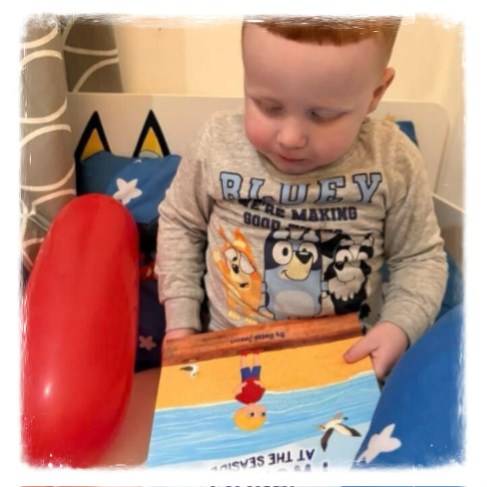
Young children — especially non‑readers and early readers — learn best when reading feels playful, relaxed and connected. When adults slow down, talk about the pictures, ask questions and follow the child’s curiosity, reading becomes something joyful rather than something pressured.
My example of a shift:
When my niece was around 7, she was reading The Lion The Witch and the Wardrobe at school. She was struggling with understanding the chapter, where four children were having a conversation in the bedroom. To help with her, I put on a different voice for each character. Suddenly the chapter came to life and she 'got it'. In her happiness, she told me 'Ahhh that makes sense, you are funny... you should be a teacher' Fast forward a couple of years and I was working in education.
In fact, if it wasn't for this special moment, I may not have embarked in such a rewarding career.
Read to me...
Simple Steps to Make Time for Reading
Get Comfy
Find a cosy spot where your child can relax and enjoy their book without other distractions.
Create a Night-time Routine
A simple pattern helps children settle into reading, while my sons were growing up their routine was always: Teeth → Toilet → Story → Bed
Choose Your Book
Let your child pick what they’d like to read.
Ask: Have you read it before? What do you think it might be about?
Talk to me...
Chat About the Story
Talking about the book helps children make sense of what they’re reading. Try simple prompts like:
-
What do you think is happening here?
-
Why do you think the character did that?
-
What might happen next?
These little conversations build confidence and deepen understanding.
Boost Language Development
When you talk about the pictures, characters and events, you’re helping your child:
-
Hear new words
-
Make connections
-
Build stronger sentences
-
Develop their own storytelling skills
Grow Vocabulary Naturally
Books introduce words children might not hear in everyday life. You can help by:
-
Pointing out interesting words
-
Explaining what they mean
-
Showing how the same word can mean different things
-
A duck (the animal)
-
To duck (to bend down quickly)
- A wave (the sea)
- To wave (object movement - hand/flag)
-
Understand the World
Stories help children explore places, ideas and experiences beyond their own. Talking about these moments helps them link the book to real life.
The Difference Between Bedtime Reading and Homework Reading
Homework Reading: Sit Up, Focused, and Purposeful
Homework reading is about practising skills.
Sitting at a table or desk helps children stay focused, see the words clearly, and build the habits they need for early reading and sight‑reading.
It’s a short, structured moment where the adult guides, supports and notices progress.
Bedtime Reading: Snuggled Up and Story‑Soaked
Bedtime reading is completely different.
This is where you snuggle up, slow down, and enjoy the story together.
No pressure, no targets — just imagination, connection, and comfort.
This is where children fall in love with books.
Why the Difference Matters
Children learn that reading can be both:
- a skill they practise
- and a joy they share
Keeping these two experiences separate helps them feel confident during homework and relaxed during story time.
Supporting reading homework?
Make It Playful
Try fun, low‑pressure activities that build confidence:
-
Make up silly sentences using words from the pages you’ve read
-
Read the sentences backwards (it sounds funny and helps with sight‑word recognition)
-
Spot-and-say: choose a word and see how many times it appears
-
Act out a moment from the story to build understanding
These small, playful moments help children become more confident, fluent readers.